
The Story of Glastonbury Abbey
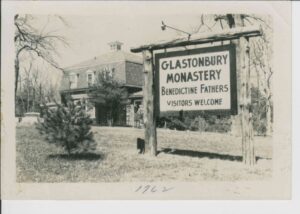 For more than fifteen centuries, Benedictine monks have lived by the Rule of St. Benedict — a way of life centered on prayer, community, and hospitality. Glastonbury Abbey continues that tradition here in Hingham.
Founded in 1954 by monks from St. Benedict’s Abbey in Wisconsin, the community arrived to little more than a quiet stretch of land and a converted horse barn. It wasn’t a grand monastery—just a simple building, originally constructed in 1903 as a summer home for a Boston wool merchant, that they hoped would become a place of prayer. From those humble beginnings grew a church, a guesthouse, and the welcoming spaces that now receive neighbors, retreatants, and visitors seeking peace.
From those early days to today, one thread has remained constant: welcoming people as they are. Hospitality has always been at the heart of the Abbey’s mission. Daily prayer, retreats, and interfaith programs all grow out of the Benedictine promise to receive each person with care and respect.
The story of the Abbey is still being written. And everyone who walks through its doors becomes part of it.
Our past, in the words of a monk who helped shape it.
Fr. Nicholas offers a brief, personal telling of the Abbey’s founding and the Benedictine tradition that guides it today.
About Benedictines
Benedictines (the Order of Saint Benedict) are both monks and nuns who live according to the Rule of Saint Benedict. They are found all over the world continue to live a communal monastic life.
In the middle ages they kept the light of the gospel alive by preserving learning in schools and scriptoria; through their guest hostels; through their work on the land; and through their lives of prayer.
The first Benedictine foundation in the United States took place in 1848 in Pennsylvania. Today Benedictines conduct universities, high schools, hospitals, retreat houses and centers of culture, learning and holiness. They are known for their liturgical expertise and praying the Divine Office many times each day.
Many lay people are attracted to Benedictine monasteries as Oblates and many come to participate in the prayer, silence and good works of the monks and nuns.
About St. Benedict
Saint Benedict, along with his twin sister, Saint Scholastica, was born in the Umbrian hill town of Norcia in Italy around 480. He was sent to Rome for studies at a time when the Roman empire was reeling from barbarian invasions.
Benedict left Rome to become a hermit for three years at Subiaco in the mountains northeast of Rome. As people sought him out for spiritual guidance he developed a community of monks.
Eventually the monks moved farther south to Monte Cassino, high above the road going from Rome to Naples. Here Benedict wrote a Rule which brought together the wisdom of monastic tradition with his own deep understanding of human beings. Benedict died around 547.
His monastery at Monte Cassino was destroyed three times over the centuries but continues in existence today. The bodies of Benedict and Scholastica are buried beneath the high altar of the church. Saint Benedict was declared to be the Patron of Europe by Pope Paul VI. The church celebrates the feast of Saint Benedict on July 11th. Benedictines also observe the older feast of his death on March 21st. Saint Scholastica is honored on February 10th.